From The Minnesota Review, an interview with Donald Pease on American Studies. From 49th Parallel, a special issue on Engaging the "New" American Studies. From Inside Higher Ed, an article on the changing geographies of American Studies. From Vanity Fair, Scenes from a White House: A handful of Camelot's private, poignant moments, from the journals of the late Arthur M. Schlesinger Jr. The real history of American liberalism is revealed in the just published journals of Arthur Schlesinger Jr, historian, presidential advisor and bon vivant (and more and more and more and more and more and more and more and more on Journals: 1952-2000). From Foreign Affairs, Walter Russell Mead reviews The Israel Lobby and US Foreign Policy by John J. Mearsheimer and Stephen M. Walt. A review of The Israel Lobby and The Deadliest Lives: The Israel Lobby and the Myth of Jewish Control by Abraham H. Foxman (and more and more). From Truthdig, an interview with Mearsheimer and Walt, a review and the introduction. An interview with Mearsheimer and Walt on why they decided to speak out. From Conversations With History, an interview with Mearsheimer and Walt on domestic politics and international relations. “I was lobbied by the Israel lobby”: A dispatch from inside the soft sell.


Frank Deford on why pro sports should be ejected from the Olympics: The Olympics is fine for what it has become — a nice showcase for second-tier individual spectator sports. While some fans welcome diversity, the globalization of the soccer economy has also aggravated xenophobic violence in stadiums all over Europe. A review of ESPN Guide to Psycho Fan Behavior by Warren St. John. How has sports writing evolved in a world where sports fans are inundated with more information than they can possibly process? ESPN columnist Bill Simmons may be the best case study. A review of Welcome to the Terror-dome: The Pain, Politics, and Promise of Sports by Dave Zirin. A review of Strides: Running Through History With an Unlikely Athlete by Benjamin Cheever. A review of The Blueprint: How the New England Patriots Beat the System to Create the Last Great NFL Superpower by Christopher Price and Never Give Up: My Stroke, My Recovery, and My Return to the NFL by Tedy Bruschi. The Extortionist: Scott Boras has changed baseball forever, and probably for the better. What’s in a (Nick) Name? A good nickname can show the reverence fans or the media have for the athlete, and it can demonstrate a wicked sense of humour, but always, it should demonstrate that sport, at its essence, should maintain a sense of fun.


From NYRB, How to Understand Islam: A review of Arguing the Just War in Islam by John Kelsay; Islam: Past, Present and Future by Hans Kung; Jihad in Islamic History: Doctrines and Practice by Michael Bonner; Infidel by Ayaan Hirsi Ali; and Secularism Confronts Islam by Olivier Roy. The conservatism of radicals: A review of Why the French Don't Like Headscarves: Islam, the State and Public Space by John R. Bowen. The introduction to The Politics of the Veil by Joan Wallach Scott. The sanctification of the burka: Frequently overlooked amid heated debate, the Muslim garment's intricate past goes a long way toward illuminating an often controversial present.


Nolan McCarty (Princeton), Keith T. Poole (UCSD), Howard Rosenthal (NYU): Does Gerrymandering Cause Polarization? John Fund on Mad Maps: It's time to draw the line on gerrymandering. From America (reg. req.), a look at how the media shape elections. From CJR, an article on the (Josh) Marshall Plan: Break news, connect the dots, stay small. The power of the click: The Internet is more than a campaign fundraising tool; it's creating a political force. More and more on The Argument by Matt Bai. The presidential candidates are scared of challenging their parties—they shouldn't be. The 2008 presidential contenders have written way too many books. A readers guide to 18 of them, the good, the bad and the cosmic. Sometimes a debate is just a debate. But when is it more than just a debate? From Rolling Stone, more on Election 08 by Matt Taibbi. Election Fever: Michael Tomasky answers reader questions. The GOP means business: With Bushism discredited and mainstream Republicans turning to candidates who sell competence, not morality, Democrats may be facing more formidable foes than they imagined. An interview with Will Folks on South Carolina politics and dirty tricks. It takes an agenda: Conservatives cannot live by Hillary-hate alone. How to win an election: Make a good first impression—in less than 250 milliseconds.


From Australian Review of Public Affairs, a series of articles on Election 2007. Australian Prime Minister John Howard—perhaps the most successful democratic leader in the world today—faces an uphill battle for reelection. He treats politics as if it were war—an election campaign, then, is the decisive battle. A review of The Longest Decade: Paul Keating, John Howard, and the Struggle for Australia's Soul by George Megalogenis. The lucky country? The moral vanity of Australia's intellectual class has led it into a political dead end. A review of Advance Australia... Where? by Hugh Mackay.


From Slate, an article on the Rockefellers and the angry commoners: A century ago, the super-rich had to contend with class warfare; and Daniel Gross on the Spinal Tap economy: The real problem with the ultra-wealthy. Why are Democrats afraid to raise taxes on the rich? Robert Reich investigates. The new best friend to CEOs: Why is Clinton's Labor secretary defending the preposterous salaries of chief executives? A review of Conscience and Corporate Culture by Kenneth E. Goodpaster. More  and more on Paul Krugman's The Conscience of a Liberal (and an interview). Tax Evasion: James Surowiecki on the great lie of supply-side economics. In defense of the AMT: If you want a simpler, fairer tax system, this may be. From PopMatters, was the housing bubble symptomatic of the infantile mentality that Benjamin Barber, in his recent book, insists that shopping-mad Americans have had foisted upon their selves? Or is there a different lesson to draw? Virtue for Sale: Will customers pay more to do good? Not my problem? Think again: How to get around the "free rider problem".


From PopMatters, a review of The Buried Book: The Loss and Rediscovery of the Great Epic of Gilgamesh by David Damrosch. From Bryn Mawr Classical Review, a review of Homeric Whispers: Intimations of Orthodoxy in the Iliad and Odyssey by Roberto Salinas Price; and a review of English Literature and Ancient Languages by Kenneth Haynes. A complex relationship with King Lear: Sadism pervades the text and the story can be confusing, yet there is something irresistible about Shakespeare's play. A review of Frankenstein: A Cultural History by Susan Tyler Hitchcock. The chapter "American Literature: Our Own Neglected Canon" from The Politically Incorrect Guide to English and American Literature by Elizabeth Kantor.


From The University Bookman, a review of The Making of the American Conservative Mind: National Review and its Times by Jeffrey Hart; a review of The Right to Be Wrong: Ending the Culture War Over Religion in America by Kevin Seamus Hasson; a review of The Myth of Judicial Activism: Making Sense of Supreme Court Decisions by Kermit Roosevelt III; a review of The Triumph of the Therapeutic by Philip Rieff; and a retrospective review of The Cultural Contradictions of Capitalism, Thirty Years Later by Daniel Bell. A review of Heroic Conservatism: Why Republicans Need to Embrace America's Ideals (and Why They Deserve to Fail If They Don't) by Michael J. Gerson. A look at why Ayn Rand will eventually overcome the embarrassment of her "followers". How Bush wrecked conservatism: The American right has embraced Bush's catastrophic war in the name of "moral clarity". But where is it written that conservatives have to be stupid? Those who do not regularly read the conservative review Modern Age may be unaware of the revolt against neo-conservatism that has lately broken out in that journal. An article on neoconservatism's heirs: The movement isn't dead, it's regrouping under the sons of its founders. John Podhoretz as editor of Commentary magazine: The best possible decision, or nepotism? (and more) Low Road to Splitsville: Right-wing publisher Richard Mellon Scaife's breakup is super-rich in tawdry details.


From Surveillance & Society, a special issue on "surveillance and criminal justice", including Torin Monahan and Tyler Wall (ASU): Somatic Surveillance: Corporeal Control Through Information Networks; and a review of Against Prediction: Profiling, Policing, and Punishing in an Actuarial Age by Bernard E. Harcourt. From The Scholar & Feminist Online, a special issue on women, prisons and change. What are prisons for? A review of Crossing the Yard: Thirty Years as a Prison Volunteer by Richard Shelton and Time of Grace: Thoughts on Nature, Family, and the Politics of Crime and Punishment by Ken Lamberton. Criminal element: Was getting the lead out of gasoline a factor in the drop in crime? From Reason, an article on breaking up the forensics monopoly: Eight ways to fix a broken system.


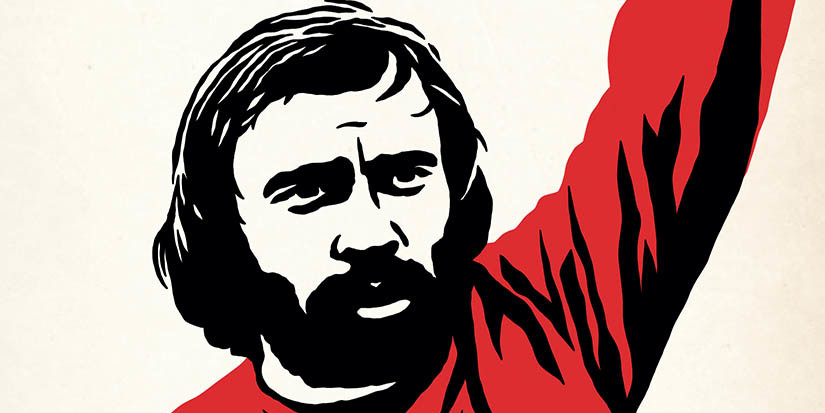
From Foreign Affairs, a quiet revolution: Francis Fukuyama reviews Forgotten Continent: The Battle for Latin America's Soul. A review of Liberty for Latin America: How to Undo Five Hundred Years of State Oppression by Alvaro Vargas Llosa. Oscar Arias on Latin America's new regionalism. From LRB, a review of Pirates of the Caribbean: Axis of Hope by Tariq Ali and Democracy and Revolution: Latin America and Socialism Today by D.L. Raby. Where did Mexicans come from? They have a choice of "origin myths" — one a tale of betrayal, another a story of beauty. An article on "delegative democracy": The case of Colombia. From Monthly Review, an article on dual power in the Venezuelan Revolution. From Truthdig, a review of Hugo! by Bart Jones, Changing Venezuela by Gregory Wilpert and Hugo Chavez by Cristina Marcano and Alberto Barrera Tyszka (and more). Dumb and Dumber: What really ought to concern us about Hugo Chavez is not his strident anti-Americanism, his burgeoning friendship with Mahmoud Ahmadinejad, or his flirtation with nuclear technology, but his dangerous incompetence. Alvaro Vargas Llosa on Evo Morales, the Hugo Chavez of Bolivia. A modern saint and sinner: Why the Che myth is bad for the left, and a look at what progressives should know about Cuba’s most iconic revolutionary.